
Environmental Implications of Ai
The AI revolution is happening at an unprecedented rate but what are the environmental costs of this?

A quick interaction with ChatGPT yielded the following useful document (a document written by AI about AI). It is difficult to determine the exact water and electricity usage from a single AI interaction because there are so many factors and it differs based on model and location. However, a report titled ‘A Water Efficiency Dataset for African Data Centers’ calculated that in some African countries writing a 10 page report by ChatGPT-4 used up to 60 litres of water. This estimate is lower than global averages and indicates how water intense these programs can be. Water and power usage by AI is expected to increase exponentially over the coming years.
Although AI may be able to help us find solutions to the many environmental problems that we face. We must also be aware of the impact of generating, processing and storing such vast volumes of information. AI systems rely on a lot of data, computing power, energy-intensive infrastructure and water all of which have a negative impact on the environment. The diagram below shows the environmental implications throughout the lifecycle of AI.
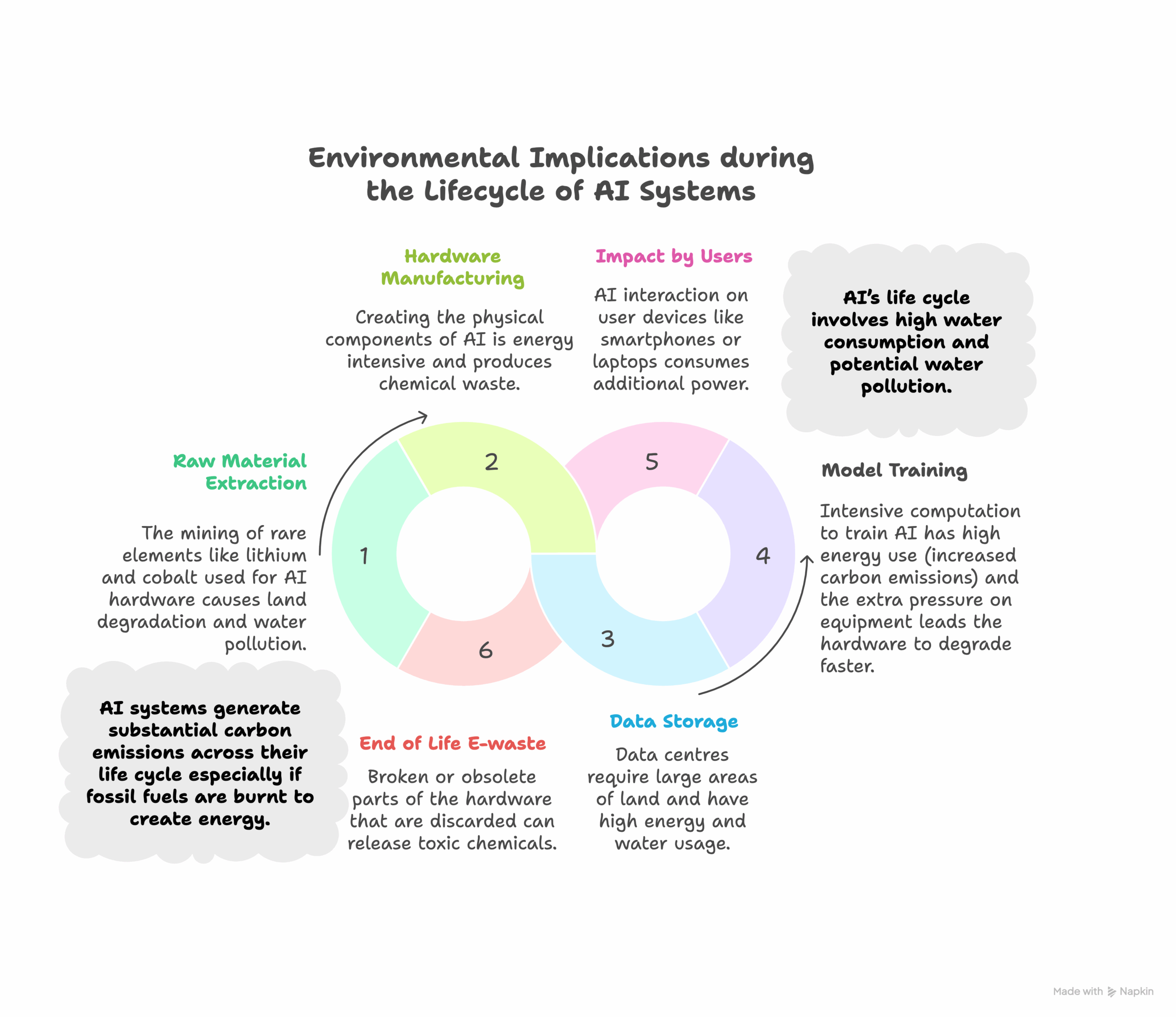 There are many ways that the AI life cycle could become more sustainable. For example, through the use of recycled and responsibly sourced materials, renewable energy to power data centres, and innovative cooling and computing techniques that reduce water and energy consumption. Achieving a more sustainable life cycle will require coordinated investment in green infrastructure, stricter environmental standards and greater transparency and accountability. By committing to these changes, the AI sector could align innovation with environmental stewardship.